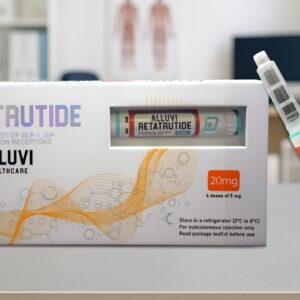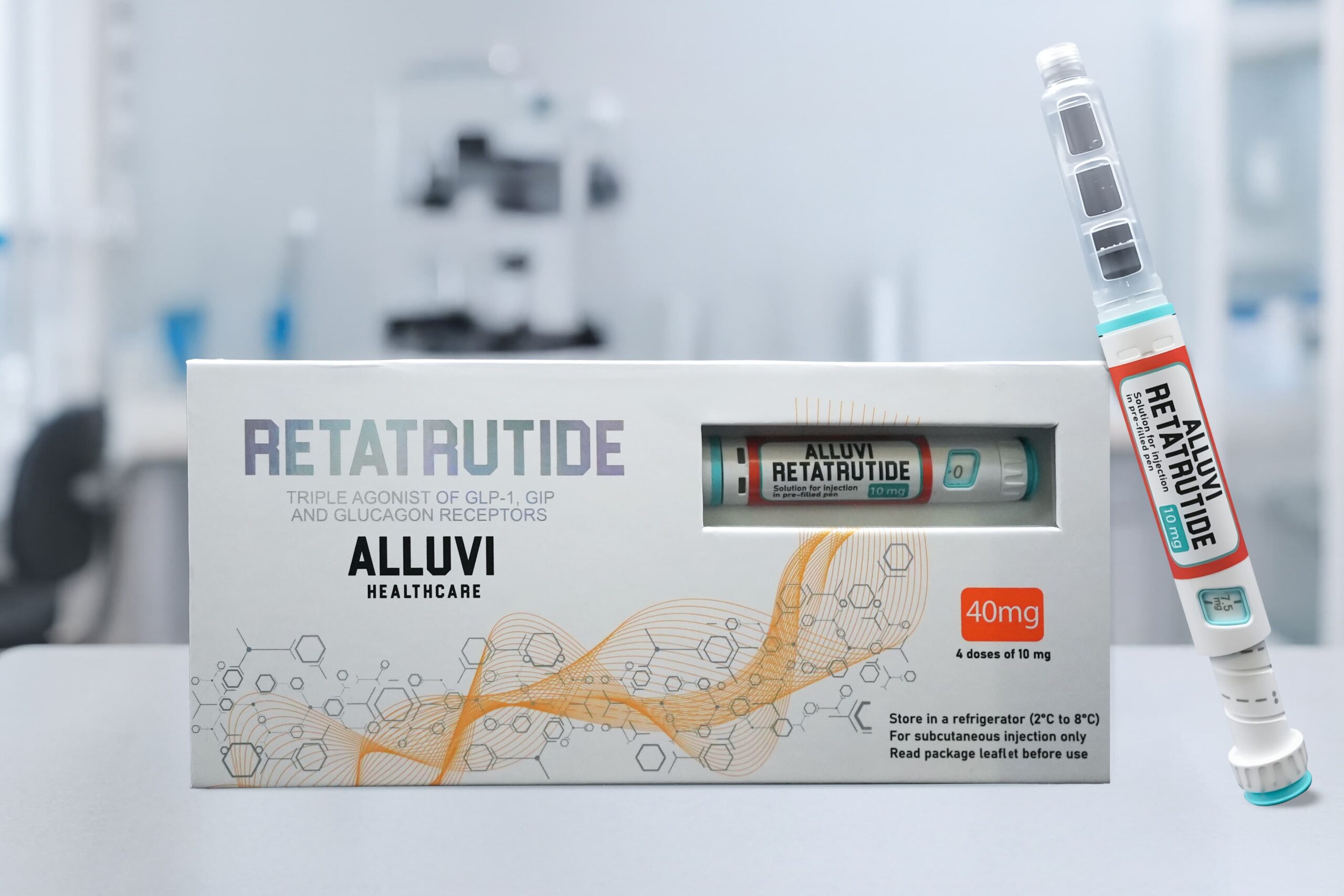
Comprehensive Guide to the Retatrutide 40mg Tri-Agonist
The Retatrutide 40mg Research Peptide represents a groundbreaking advancement in the in-vitro study of complex metabolic pathways. As a next-generation synthetic peptide, it acts as a single-molecule triple agonist, simultaneously targeting the glucagon-like peptide-1 (GLP-1), glucose-dependent insulinotropic polypeptide (GIP), and glucagon (GCGR) receptors.
In recent years, the Retatrutide 40mg Research Peptide has become a primary focus for laboratory investigators exploring systemic metabolic homeostasis. By engaging three distinct receptor pathways simultaneously, this compound offers a uniquely comprehensive opportunity to study neuroendocrine interactions and energy regulation in a sterile, rigorously controlled environment.
Chemical and Molecular Specifications
Understanding the intricate biochemical profile of the Retatrutide 40mg Research Peptide is essential for ensuring accuracy during analytical testing and advanced cellular assays. This sequence is synthesized to exacting standards to maintain its crucial tri-receptor binding affinity during rigorous laboratory experimentation.
-
Molecular Formula: $C_{223}H_{343}N_{46}O_{70}$
-
Molar Mass: 4731.33 g/mol
-
Sequence modifications: Linear peptide engineered with a complex fatty diacid moiety.
-
Appearance: White, sterile lyophilized powder.
-
Solubility: Highly soluble in bacteriostatic water and specific aqueous buffers.
Researchers utilizing the Retatrutide 40mg Research Peptide should specifically note its structural modifications. The addition of the fatty acid moiety is specifically engineered to extend its half-life, enhance albumin binding, and stabilize the molecule within experimental in-vitro cellular models.
Mechanisms of Action in Laboratory Studies
The primary research interest in the Retatrutide 40mg Research Peptide lies in its synergistic triple agonism. In controlled laboratory environments, investigators observe how this compound modulates intracellular cAMP levels across multiple cell types, deeply influencing downstream signaling cascades.
By engaging the GLP-1, GIP, and GCGR receptors simultaneously, it creates a synergistic effect that profoundly amplifies cellular responses. This makes the observation of intracellular pathways uniquely dynamic, allowing researchers to track complex lipid and glucose metabolism mechanisms concurrently.
For a comprehensive overview of triple-agonist pharmacological profiles, researchers frequently reference the highly authoritative National Center for Biotechnology Information (NCBI) database, which catalogs extensive peer-reviewed data on incretin mimetics and their binding kinetics.
When introduced to hepatic and pancreatic cell cultures, the compound actively stimulates distinct synthesis mechanisms in a strictly concentration-dependent manner. These mechanisms make the Retatrutide 40mg Research Peptide an invaluable tool for studying the fundamental processes of cellular receptor sensitivity and systemic energy expenditure.
Common Applications in In-Vitro Research
Due to its profound metabolic activity, the Retatrutide 40mg Research Peptide is deployed across a wide spectrum of biochemical disciplines. Current in-vitro studies frequently utilize this pristine compound to investigate the cellular mechanisms underlying severe lipid accumulation and glycemic dysregulation.
Laboratory models focusing on hepatic cellular energy homeostasis rely heavily on the peptide to observe the modulation of lipid clearance and the reduction of oxidative stress markers in isolated cell populations. Investigators utilize these models to assess the potential of tri-agonists in reversing cellular lipotoxicity.
Furthermore, this compound is heavily utilized in experimental receptor-binding assays. These complex studies are designed to understand the distinct binding kinetics, receptor internalization rates, and competitive antagonism of triple agonists compared to standard, selective dual analogs.
Handling, Preparation, and Storage Protocols
To maintain maximum stability and efficacy, proper handling of the Retatrutide 40mg Research Peptide is absolutely essential for your laboratory operations. The complex, heavily modified structure of this compound means it is highly susceptible to structural degradation if improperly managed during transit or storage.
The compound is supplied as a pristine lyophilized powder and must be stored in a temperature-controlled environment away from direct light, heat, and atmospheric moisture. For optimal long-term preservation, storing the unconstituted vial at a steady -20°C is highly recommended by industry professionals.
Upon preparation for laboratory use, the dry powder should be carefully reconstituted using sterile bacteriostatic water or designated saline solution. Once reconstituted, the active solution should be kept continuously refrigerated between 2°C and 8°C and utilized strictly within a timeframe that prevents peptide chain degradation.
Quality Assurance and Third-Party Testing
At Peptide Slim Labs, we implicitly understand that reliable, verifiable data is the absolute foundation of meaningful scientific discovery. That is why our Retatrutide 40mg Research Peptide undergoes rigorous third-party analytical testing to guarantee a molecular purity level far exceeding standard industry benchmarks.
Through advanced High-Performance Liquid Chromatography (HPLC) and Mass Spectrometry (MS) analysis, we meticulously verify the exact molecular sequence and confidently confirm the complete absence of heavy metal impurities, residual solvents, or truncated peptide chains. This unwavering commitment to strict, uncompromising quality control ensures your laboratory receives a pristine, verifiable compound for all your research needs.