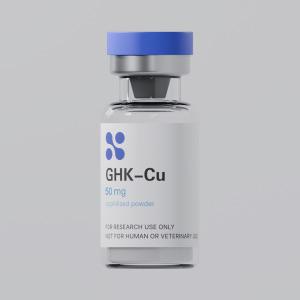
Comprehensive Guide to the GHK-Cu Research Peptide
The GHK-Cu Research Peptide represents one of the most widely studied and documented copper-binding tripeptides in modern molecular biology. Originally isolated from human plasma in 1973, this naturally occurring complex consists of the amino acid sequence glycyl-l-histidyl-l-lysine bound to a copper ion.
In the decades since its discovery, the GHK-Cu Research Peptide has become a cornerstone compound for laboratory investigators exploring cellular regeneration, gene expression modulation, and extracellular matrix remodeling. As an essential trace element, copper plays a vital role in cellular metabolism, and this specific peptide sequence acts as a highly efficient delivery mechanism for copper ions in controlled cellular environments.
Chemical and Molecular Specifications
Understanding the precise biochemical profile of the GHK-Cu Research Peptide is crucial for ensuring accuracy in analytical testing and in-vitro assays. The compound is synthesized to exacting standards to maintain its structural integrity and copper-binding affinity.
-
Molecular Formula: $C_{14}H_{24}N_{6}O_{4}$
-
Molar Mass: $340.38 \text{ g/mol}$
-
Amino Acid Sequence: Gly-His-Lys
-
Appearance: Distinctive blue lyophilized powder (indicative of copper binding)
-
Solubility: Highly soluble in water and aqueous buffers
Researchers utilizing the GHK-Cu Research Peptide should note its high binding affinity for $Cu^{2+}$ ions. This unique biochemical structure is what allows the peptide to influence various cellular pathways effectively when applied to isolated tissue cultures and fibroblast cell lines.
Mechanisms of Action in Laboratory Studies
The primary research interest in the GHK-Cu Research Peptide stems from its pleiotropic effects on cellular function and its ability to modulate the expression of thousands of genes. In controlled laboratory environments, investigators have observed that this compound can upregulate genes associated with cellular growth while simultaneously downregulating genes linked to cellular stress.
For a comprehensive overview of its genomic impact, researchers frequently reference the National Center for Biotechnology Information (NCBI) database, which catalogs extensive peer-reviewed data on copper-binding peptides.
When introduced to fibroblast cultures, the compound actively stimulates the synthesis of collagen, elastin, and various glycosaminoglycans. These mechanisms make the peptide an invaluable tool for studying the fundamental processes of tissue remodeling and structural homeostasis in a sterile, controlled setting.
Common Applications in In-Vitro Research
Due to its versatile biological activity, the GHK-Cu Research Peptide is deployed across a wide spectrum of scientific disciplines. Current in-vitro studies frequently utilize this compound to investigate the biochemical pathways underlying cellular regeneration.
Laboratory models focusing on anti-inflammatory responses rely on the peptide to observe the modulation of inflammatory cytokines and the reduction of oxidative stress markers in isolated cell populations.
Furthermore, the GHK-Cu Research Peptide is heavily utilized in experimental stem cell research, specifically in assays designed to understand the microenvironmental factors that encourage proliferation and differentiation. By providing a stable and highly reactive copper complex, researchers can precisely measure the impact of metal ion availability on cellular enzymatic activity.
Handling, Preparation, and Storage Protocols
To maintain maximum stability and efficacy, proper handling of the GHK-Cu Research Peptide is absolutely essential for your laboratory. The compound is supplied as a lyophilized powder and must be stored in a temperature-controlled environment away from direct light and moisture.
For long-term preservation, storing the unconstituted vial at -20°C is highly recommended. Upon preparation for laboratory use, the powder should be reconstituted using bacteriostatic water or a sterile saline solution. Once reconstituted, the solution should be kept refrigerated between 2°C and 8°C and utilized within a timeframe that prevents structural degradation.
Quality Assurance and Third-Party Testing
At Peptide Slim Labs, we understand that reliable data is the foundation of scientific discovery. That is why our GHK-Cu Research Peptide undergoes rigorous third-party analytical testing to guarantee a purity level exceeding standard industry benchmarks.
Through advanced High-Performance Liquid Chromatography (HPLC) and Mass Spectrometry (MS) analysis, we verify the exact molecular structure and confirm the absence of heavy metal impurities. This commitment to strict quality control ensures that your laboratory receives a pristine, verifiable compound for highly accurate in-vitro studies.


Reviews
There are no reviews yet.